
Undergraduate education
Students learn neurophysiology, including neurons, synapses, sensory and motor systems, and higher brain functions.
We investigate the mechanisms underlying functional changes in the brain, spinal cord, and peripheral nervous system. By bridging physiology, basic neuroscience, and clinical neuroscience, we aim to advance research and education toward a deeper understanding of neural function and recovery.
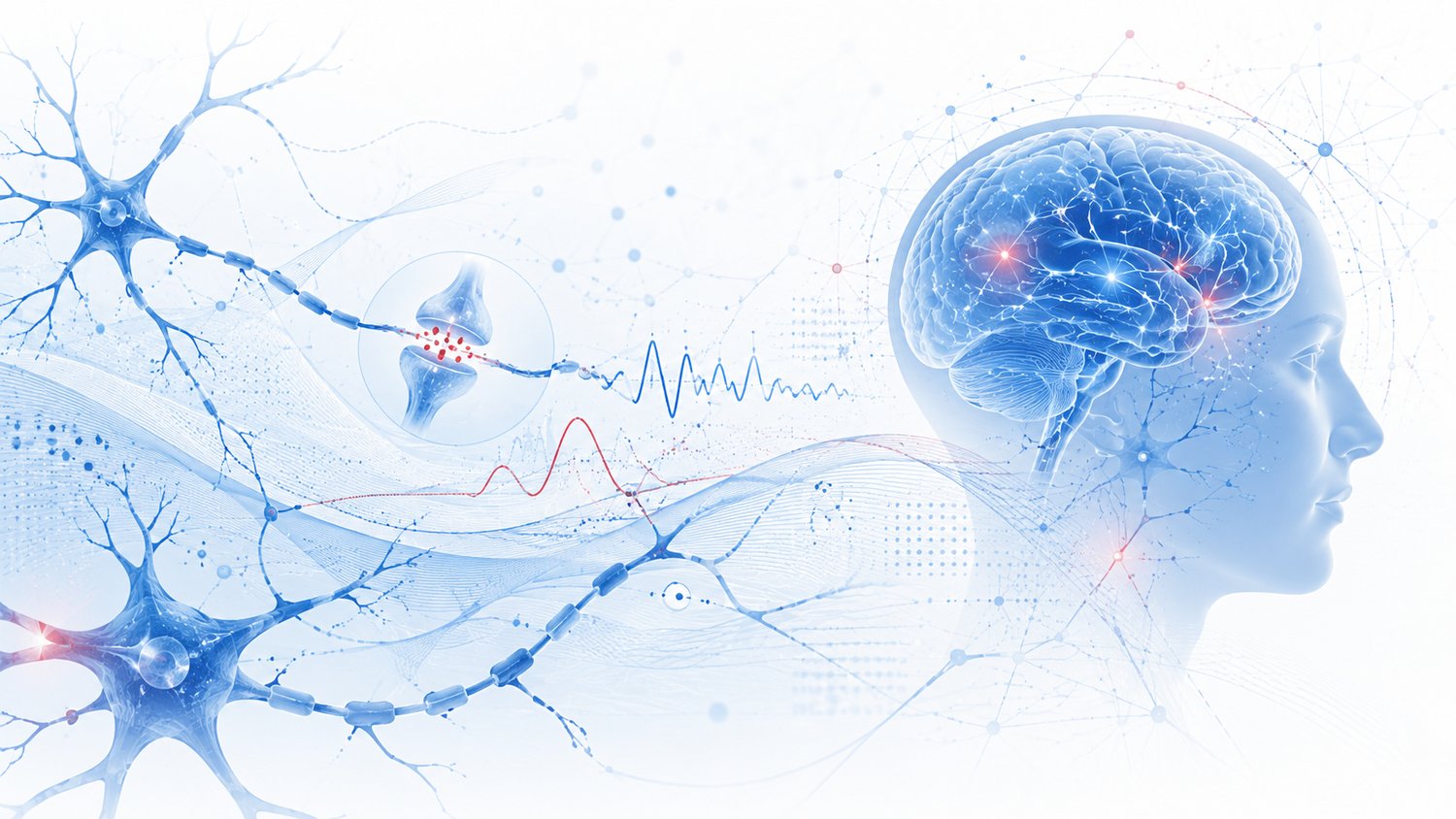
We study functional changes in the brain, spinal cord, and peripheral nervous system and the mechanisms that underlie them.
The nervous system receives environmental signals, integrates information, and generates adaptive behavior. Our division studies neural function across molecules, cells, circuits, and behavior, contributing to physiology and neuroscience through research and education.
We emphasize not only acquiring knowledge, but also developing the ability to reason through the mechanisms of biological phenomena.
Students learn neurophysiology, including neurons, synapses, sensory and motor systems, and higher brain functions.
Students measure and analyze biological signals such as EMG and EEG to understand physiological phenomena through hands-on experience.
Students interested in neuroscience are welcome. No prior research experience is required.